


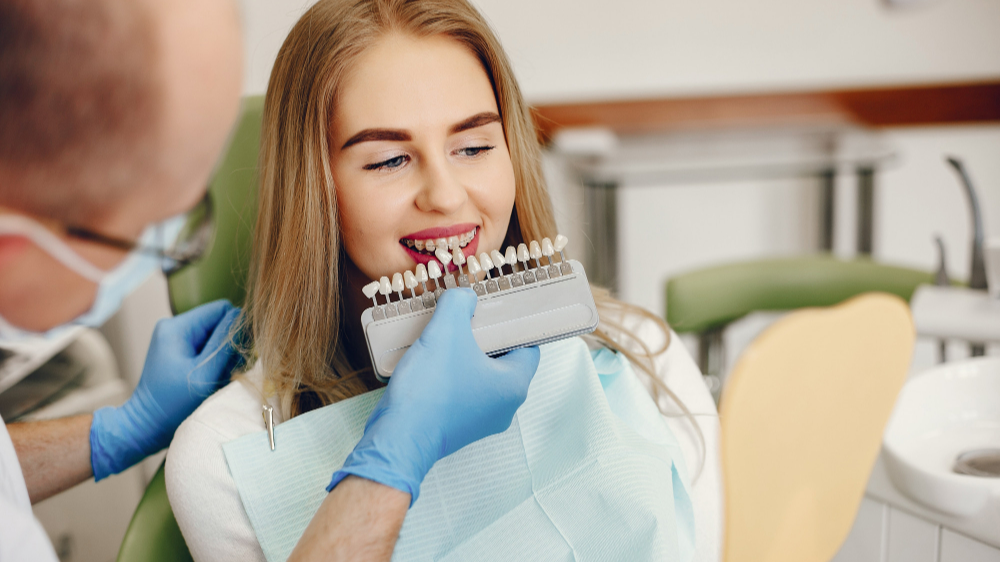
A veneer consists of a thin layer of porcelain or a tooth-coloured composite resin which is bonded onto the front surface of a tooth. When veneers are used on teeth, they can alter the colour, the shape and minor alignment problems without making any changes to the back of the tooth or the root. In Dubai, people ask two questions regarding veneers, and these are generally asked at the same time: how will they look and for how long will they last?
The first question is simple, but it takes longer to answer the second one honestly since the life span of veneers depends much less on the material and much more on the mouth in which they are placed and on the daily habits of the person wearing them. Life in the UAE introduces a number of factors that would never be mentioned in an article written about a more temperate country. The long summers, the constant use of air conditioning, drinking large quantities of karaak, the late shisha evenings and the fact that the population moves in and out all year round all alter the calculations.
Table of contents
-
The timelines you can reasonably expect
-
Veneers rarely fail on their own
-
What the heat and air conditioning do inside your mouth
-
Karak, Arabic coffee and shisha
-
Grinding, gym clenching and the travel gap
-
Habits that add years
-
Signs your veneers are nearing the end
-
Conclusion
-
Contact us
The timelines you can reasonably expect
Porcelain veneers typically last between ten and fifteen years, although many exceed this duration and a few may need care even before that time if they have suffered an accident or have an untreated bite issue. Composite veneers generally require resurfacing or replacement after four to eight years, although they can be polished and repaired during that time.
What causes this difference? Porcelain is a type of glazed ceramic, and its surface remains smooth without taking on colour from food and drink. Composite, on the other hand, is a softer resin which wears down at the biting edges and absorbs pigment so that it becomes dull over time even if there is nothing wrong with it.
Consider the ranges as average figures rather than as fixed values applicable to your specific situation. Individuals can have the same veneer when they leave on the same day and yet be in very different positions eight years later.
Veneers rarely fail on their own
What is surprising to most patients is that ceramic is stable; the areas that usually require attention are the bond line at which the veneer meets the tooth, the gum lying above it, and the natural tooth structure below it.
The main reasons for having veneers for teeth replaced early are decay at the edge, gum recession which exposes the point where the veneer joins the tooth, a chip caused by grinding or an accident, and a debond in which the veneer separates but remains intact. Therefore, the care of veneers essentially comes down to caring for the tooth and gum that hold them in place.
What the heat and air conditioning do inside your mouth
The summer season in Dubai forces the majority of us to experience two extremes: the high outdoor temperatures, which cause rapid dehydration, and the indoor air conditioning that dries out the air we breathe for the rest of the day. Furthermore, many people breathe through their mouths when sleeping under a cold vent. As a result, saliva production decreases.
Saliva has a function that goes beyond maintaining a comfortable mouth; it neutralises acid, wipes away food particles and transports minerals which help to protect the enamel. If saliva is in short supply, plaque remains at the gumline for a longer time, and since the edge of a veneer is located there, this is precisely where decay can occur. Together with the summer habit of drinking cold sweetened beverages and sports drinks, decay can thus develop at the margin of an otherwise perfect veneer.
One of the best things you can do for the longevity of your veneers is to drink water throughout the day; if your mouth tends to feel dry in the mornings, be sure to mention this at your next visit as dryness may be caused by some medications.
Karak, Arabic coffee and shisha
Porcelain tends to resist staining. The resin cement along its edge doesn't, nor does the composite. After many years of being exposed to karak, Arabic coffee, black tea and red sauces, the thin line at the gum will darken a little, which causes the veneer to have a slightly outlined appearance even though there is no structural problem.
Shisha contributes both tar build-up and heat, factors which fade the appearance of surfaces and cause the natural teeth adjacent to your veneers to stain. It is this second point which people tend to overlook. When the natural teeth become darker but the veneers remain the same colour, the smile no longer matches and patients usually think that the veneers have failed when in fact it is the neighbouring teeth that have changed.
Acidic drinks are important as well—after drinking them rinse your mouth out with water and then wait about thirty minutes before brushing, since the enamel is temporarily weakened following an acid exposure.
Grinding, gym clenching and the travel gap
The most common cause of porcelain chips is a condition called bruxism, which is referred to as night grinding. Most people don't realise that they are grinding their teeth until a dentist points out the wear pattern. Climbing heavy weights at the gym also involves clenching the teeth, and sports which involve contact have an obvious risk due to impact. A custom night guard represents a small investment but offers protection for a much larger amount.
The travel gap is something specific to living in this place. Because expats have busy schedules, they spend long periods away from the country, spend their summers at home, and have their checkups, which gradually go by a year. A small chip or a patch of bleeding gums is noticed and then forgotten about, and six months later it requires more treatment than it otherwise would. This situation also occurs with the veneers that are fitted abroad during a holiday when no local follow-up has been arranged.
Habits that add years
The length of time that veneers on the teeth retain the appearance they had on the day they were fitted is determined by the small daily decisions people make.
-
Use a gentle brush with a non-abrasive toothpaste since whitening pastes are generally gritty and will cause the composite surfaces to become dull over time.
-
Floss or use interdental brushes to clean between the teeth every day, with a particular focus on the gumline since that is where the edge of the veneer is situated.
-
If you grind or clench, then you should wear a night guard and replace it when it has worn thin.
-
After having smoked karak, coffee and shisha, rinse with water rather than leaving the pigment on.
-
Avoid putting the teeth into the packaging, the ice, the pistachio shells and the bottle caps.
-
Book hygiene visits about every two months so that the margins and gums can be checked before any problems develop.
-
If you plan to whiten your natural teeth, you should do so before the veneers are made because bonded veneers do not change in shade as a result of bleaching.
Another point is worth mentioning: the method used in making and fitting a veneer has an effect on its lifespan. Because digital intraoral scanning has improved the accuracy with which porcelain teeth veneers fit at the margins, and since minimal preparation techniques seek to preserve as much of the natural enamel as possible, a bond to enamel proves to be more predictable over the years than a bond to the softer layer underneath it.
Signs your veneers for teeth are nearing the end
Be on the lookout for a dark line at the gum, an edge which feels rough when you tongue it, a new sensitivity to cold, or a veneer that clicks or seems slightly mobile. If the bleeding gums are associated with just one tooth, this should also be taken as a sign. Although none of these symptoms indicates a serious problem, early intervention often results in repair rather than replacement, particularly in the case of composite. With porcelain, when it has failed, it is usually replaced rather than repaired, so it is worth making an appointment with Magnum Dental Clinic's JLT branch to deal with issues early.
Conclusion
Porcelain veneers for teeth in the UAE commonly last ten to fifteen years and composite veneers around four to eight, with real variation from person to person. Heat, air conditioning, dry mouth, staining drinks, shisha, grinding and missed checkups are the local factors that decide where you land in that range. Regular reviews, a sensible cleaning routine and a night guard go a long way toward pushing you to the better end of it.
Contact us
Name: Magnum Dental Clinic – JLT
Address: Shop No. 2, Indigo Tower, Cluster D, Al Thanyah Fifth, Jumeirah Lakes Towers, Dubai, United Arab Emirates
Phone: +971 54 452 2332












Comments
0 commentsNo comments yet. Be the first to share your thoughts!