
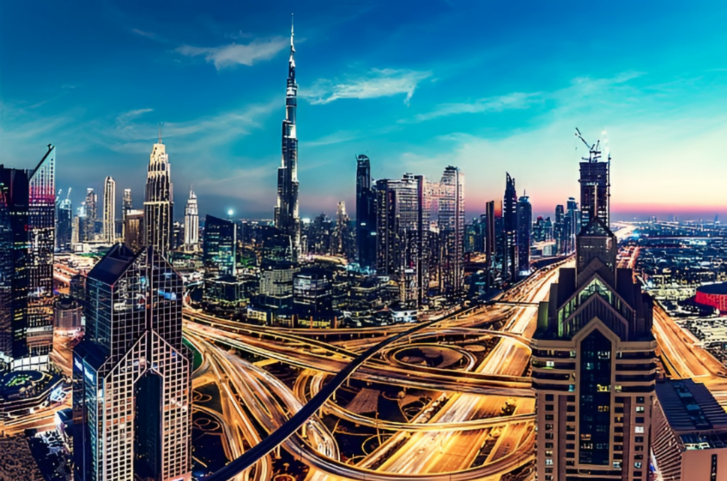
Dubai Real Estate Defies Regional Tensions as $100 Million Property Deals Continue
Dubai’s real estate market continues to demonstrate resilience despite ongoing regional tensions, with high-value property transactions still taking place and developers maintaining normal operations across the sector.
Industry experts say that while some investors have adopted a cautious “wait-and-see” approach, the overall market remains stable, supported by strong economic fundamentals and sustained demand from both local and international buyers.
High-value deals highlight investor confidence
Recent transactions underscore the strength of Dubai’s property market, including a property deal exceeding $100 million completed earlier this week. The sale reflects continued investor interest in the emirate’s premium real estate despite geopolitical developments in the region.
Real estate broker Ben Crompton noted that while sentiment has become slightly cautious in the short term, deals that were already underway are progressing as expected.
“Buyers who have already signed memorandums of understanding are proceeding as normal, and negotiations for other deals are continuing,” Crompton said. “However, many buyers are currently observing the situation before making new commitments.”
He added that if regional tensions ease quickly, property prices may stabilise in the short term before resuming their upward trend later in the year.
Overseas investors monitoring developments
International buyers, who represent a significant share of the UAE’s property investors, are closely watching geopolitical developments, according to market brokers.
One broker, speaking anonymously, said market activity remains largely steady, with developers continuing to move forward with new project launches.
“A project scheduled to launch next week is going ahead as planned,” the broker said. “Developers are not delaying launches because of the current situation.”
The broker highlighted that the UAE’s real estate market, particularly in Abu Dhabi, benefits from a strong base of long-term residents and families who plan to stay in the country for years.
“Many families have been living here for a long time and consider the UAE their home. With their jobs, schools, and families here, they are still interested in buying property for the long term,” the broker explained.
However, a small portion of overseas investors—particularly from markets such as the UK, the US, and Germany—have become more cautious amid global uncertainty.
Opportunities emerge for cash investors
Periods of uncertainty can also create investment opportunities. Some investors with readily available funds are taking advantage of sellers who wish to exit the market quickly.
According to brokers, certain property owners in the secondary market have slightly reduced asking prices, allowing cash buyers to negotiate attractive deals.
“For instance, if a property valued at around Dh1.3 million needs to be sold urgently, a cash buyer may offer Dh1 million for a quick transaction,” the broker said. “They may hold the property until the market stabilises and then resell it closer to its original market value.”
Properties tied closely to tourism activity, such as short-term rental units, may experience greater sensitivity to market sentiment, while newly launched developments have largely maintained their original pricing.
Developers maintain stable operations
Developers have emphasised that operations across the UAE’s real estate sector remain unaffected.
In a recent statement, Aldar Properties confirmed that all its residential communities, retail destinations, commercial offices, hotels, schools, and development sites across the country continue to operate without interruption.
The company also highlighted its strong financial position, with more than Dh30 billion in liquidity, including Dh14.2 billion in free cash and Dh16.4 billion in undrawn bank facilities.
Developers have largely maintained their original project launch prices. Instead, some are offering more flexible payment plans to support investor participation.
“In uncertain times, developers sometimes adjust payment structures,” the broker said. “Instead of a standard 50-50 plan, they may offer options like 35-65 or 40-60 to reduce the upfront cost for buyers.”
Strong fundamentals support long-term growth
Despite short-term caution from some investors, market analysts say the UAE’s property sector remains underpinned by strong economic fundamentals.
Rapid population growth, expanding international investment, and ongoing economic development in both Dubai and Abu Dhabi continue to support demand for residential property.
Key residential hubs such as Reem Island, Yas Island, and Saadiyat Island are expected to see sustained demand due to ongoing infrastructure and lifestyle developments.
“Real estate in the UAE has historically shown long-term upward movement, even if short-term fluctuations occur,” the broker said.
Crompton echoed that outlook, stressing that investor confidence in the UAE’s economy remains strong.
“The economic fundamentals are very strong,” he said. “Capital dislikes uncertainty, so once there is greater clarity in the region, investors will feel more comfortable committing again.”




Add Your Directory With Us
Boost your visibility with our Business Directory

Add Your BCard With Us
Open the door to new professional connections.
DayOfDubai
Business Services

Comments (0)
Please log in to post a comment
Login to CommentNo comments yet. Be the first to share your thoughts!