

RISE Summit 2026: Global Investment Leaders Explore Shifting Capital Flows and Dubai’s Growth Opportunities

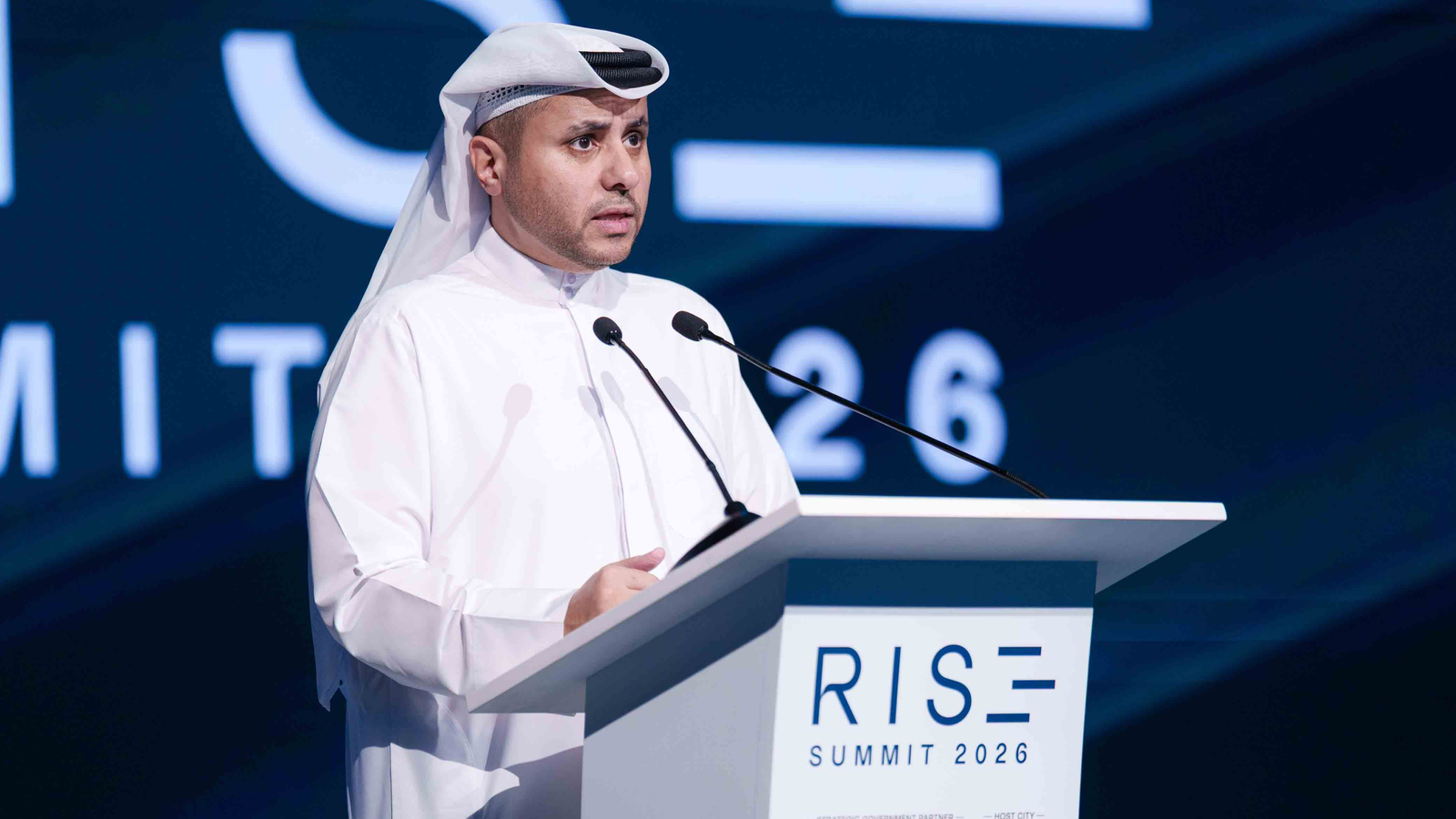
Global investment leaders, policymakers and industry executives gathered at Dubai World Trade Centre for RISE Summit 2026 to examine how geopolitical shifts, changing trade relationships and evolving financial conditions are reshaping capital flows and creating new opportunities across real estate, infrastructure and emerging economic sectors.
Held under the theme “Recharging Momentum in Global Economies,” the Summit explored changing investment priorities, the future of global markets and the role of cities in driving economic growth. Discussions also covered the future experience economy, including hospitality, tourism and new models of urban development.
The event brought together more than 500 delegates, including institutional investors, sovereign wealth representatives, private equity firms, family offices, developers and project owners.
UAE Targets a More Productive Economy
The UAE’s economic transformation featured prominently at the Summit, with His Excellency Abdulla bin Touq Al Marri, Minister of Economy and Tourism, highlighting the country’s ambition to build a more productive economy.
“When you ask about 2027, we're not going to come back to the same economy. We're going to have a different economy in 2027, a more productive economy,” he said.
The Summit’s Global Leaders Series examined how international economic and geopolitical realignments are influencing investment decisions, including where investors choose to deploy capital and how they manage risk across markets.
José Manuel Barroso Calls for Investment Diversification
José Manuel Barroso, Chairman of International Advisors at Goldman Sachs and former President of the European Commission, addressed the changing global investment landscape during a session titled The Great Capital Shift.
He said geopolitical developments, alongside scientific and technological advances, were changing how long-term investors assess opportunities and allocate capital.
“We are witnessing a fundamental change. This is not only geopolitical; it is also a scientific and technological revolution, and the way we allocate capital is going to change phenomenally,” Barroso said.
He identified energy, infrastructure, technology and defence as sectors likely to influence markets in the years ahead, advising investors to maintain liquidity and diversify across geographies and industries rather than pursuing growth at any price.
Discussing the Gulf’s role in global investment, Barroso said investors would continue to seek diversification beyond the United States, creating opportunities for the region to connect established and emerging investment destinations.
He also highlighted the importance of the US dollar, American innovation and the country’s geopolitical influence in sustaining the United States’ central role in the world economy.
Allianz Economist Examines Higher Interest Rates and Real Assets
Ludovic Subran, Group Chief Investment Officer and Chief Economist at Allianz, examined the implications of the interest-rate environment for institutional investors during a session titled Long-Term Capital in a Higher-Rate World.
Subran highlighted the extent to which artificial intelligence investment and data-centre spending are supporting economic growth, particularly in the United States, while raising questions about what could sustain momentum as the current investment cycle evolves.
“My main concern is whether the US can sustain the momentum we have seen so far with what is coming in 2027. Global trade is in recession this year if you take out AI, which shows how much the AI economy and data-centre capex are driving global and US growth,” he said.
He added that companies outside the AI sector were already showing caution about future investment decisions, making it important to identify potential sources of growth beyond the current technology-led cycle.
Subran also pointed to opportunities emerging from the convergence of real estate, infrastructure and technology, particularly in logistics and warehousing.
“Real estate is really morphing into something much more complicated. The lines between real estate and infrastructure are getting blurred, particularly across logistics and warehousing, creating interesting opportunities for portfolio construction,” he said.
Dubai’s D33 Agenda Supports Long-Term Growth
Dubai’s development model and its appeal to international investors formed another key part of the Summit’s programme.
Mohamed Alabbar, Founder and Managing Director of Emaar Properties, discussed the importance of long-term conviction in city-building and the ability to sustain major development through changing market cycles.
His Excellency Issam Kazim, CEO of Dubai Corporation for Tourism and Commerce Marketing, examined the economic foundations of Dubai’s resilience and the next phase of growth under the D33 Economic Agenda.
Kazim said the strategy builds on established strengths in logistics, manufacturing, financial services and tourism while reinforcing Dubai’s position as a gateway to regional and international markets.
“When we started our D33 strategy, we focused on industries including logistics, manufacturing, financial services and tourism. None of these were new industries for us; we were already strong in them, but perhaps we were not as vocal about them. Today, we are doubling down on those strengths,” he said.
He added that companies choose Dubai as a regional headquarters not only because of its resident population but also because of the international markets and customers accessible from the emirate.
Tourism Focus Shifts Towards Visitor Quality
Tourism remained central to discussions about Dubai’s international competitiveness, with Kazim highlighting the value of attracting visitors who develop a lasting connection with the city.
“For me, the biggest value is quality rather than quantity. The quality visitors who come to Dubai become genuine advocates of the city because they understand the value Dubai adds,” he said.
Kazim noted that around 25% of Dubai’s visitors return within 12 months, describing repeat visits as an indication of the relationship travellers develop with the destination.
The discussion highlighted tourism’s role alongside logistics, manufacturing and financial services in supporting Dubai’s broader economic strategy.
Investors Become More Selective About Markets and Assets
Across the Summit, discussions highlighted a changing investment environment in which capital remains available but investors are becoming more selective about markets, assets and partnerships.
Economic resilience, infrastructure capacity, regulatory clarity and access to long-term growth were identified as important considerations shaping investment decisions.
The programme examined how these factors are translating into opportunities across real estate, infrastructure, technology and the wider built environment.
By bringing together institutional investors, sovereign capital, private equity, family offices, policymakers, developers and project owners, RISE Summit 2026 provided a platform to discuss how global economic changes could shape future investment flows and create opportunities across markets and sectors.