


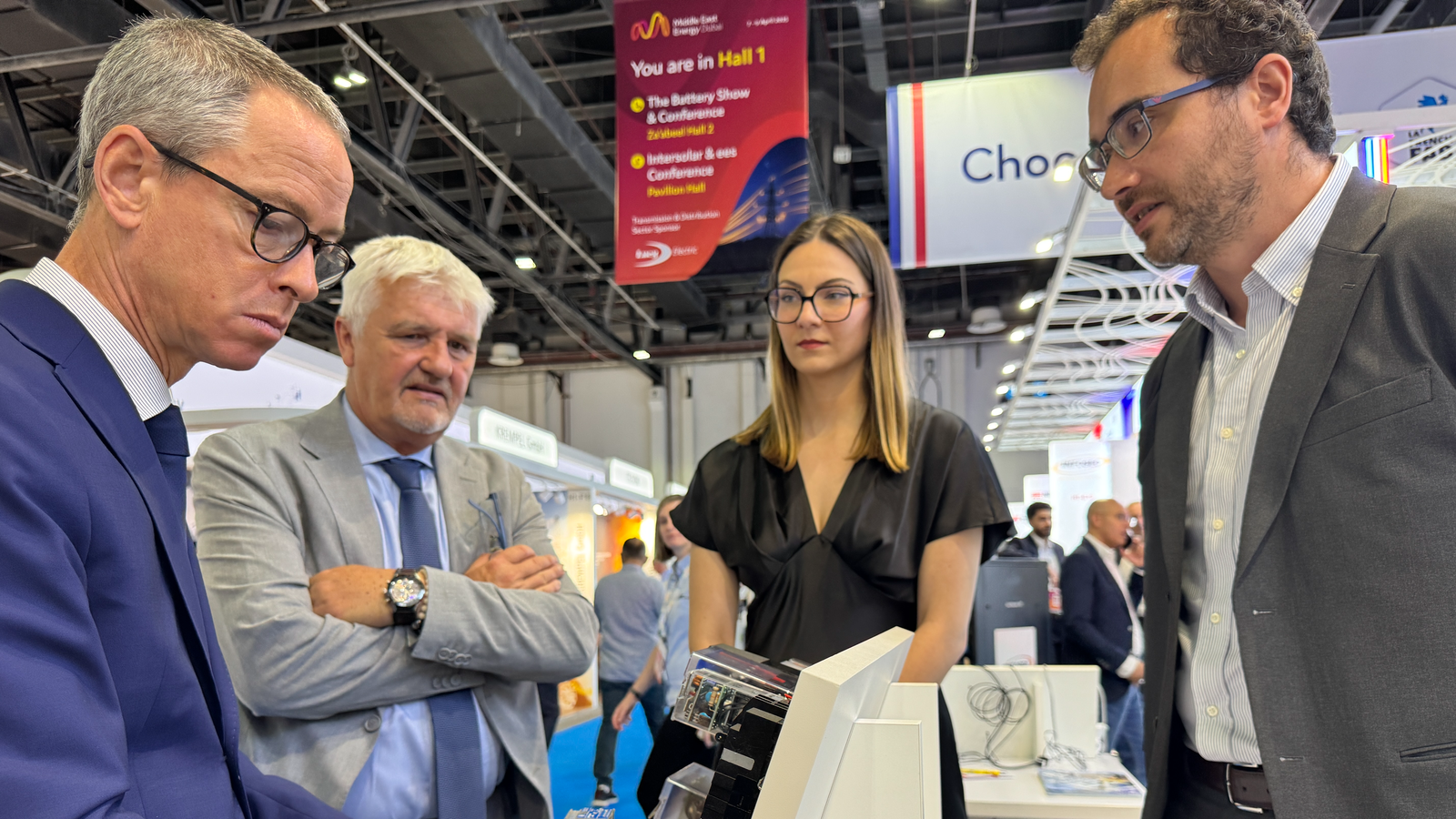
France is set to participate in Middle East Energy 2026 at Dubai World Trade Centre from September 1 to 3, showcasing technologies aimed at supporting the Gulf’s transition towards smarter, more resilient and more efficient power infrastructure.
Through a dedicated Business France Pavilion, 13 French companies will present solutions covering grid resilience, smart infrastructure, energy efficiency, critical power and renewable-energy integration. The event marks the 50th edition of Middle East Energy.
The French delegation arrives as electricity demand across the Gulf continues to rise alongside increasing renewable-energy deployment and digitalisation. These trends are placing greater emphasis on flexible, reliable and interconnected power networks.
In the UAE, the updated Energy Strategy 2050 anticipates AED 150 billion to AED 200 billion in investment by 2030, creating opportunities across areas such as smart grids, energy storage, digitalisation and sustainable infrastructure.
GCC Strengthens Focus on Grid Infrastructure
As renewable capacity expands across the region, transmission networks, interconnection and grid flexibility are becoming increasingly important to energy security.
A key regional development is the GCC Interconnection Authority’s direct interconnection project between Oman and the GCC grid. The project includes approximately 530 kilometres of 400kV transmission lines connecting Oman directly to the regional network, strengthening electricity exchange and grid resilience.
Dubai is also investing heavily in smart-grid infrastructure. Dubai Electricity and Water Authority (DEWA) has allocated AED 7 billion to its Smart Grid Programme through 2035, with investments in digital technologies, automation and data-driven systems designed to improve network reliability and efficiency while supporting renewable-energy integration.
The need for stronger grid infrastructure extends beyond the Gulf. According to the International Energy Agency’s Electricity 2026 report, annual investment in electricity grids will need to increase by around 50% by 2030 from approximately $400 billion currently to keep pace with rising electricity demand.
France and UAE Strengthen Energy Cooperation
France’s presence at Middle East Energy also highlights the growing economic and strategic relationship between France and the UAE, particularly in energy transition, climate action, advanced technologies and artificial intelligence.
The UAE is France’s first customer in the Gulf, while bilateral trade reached €10.8 billion in 2025, compared with €8.5 billion in 2024 and €7.4 billion in 2023.
Energy cooperation between the two countries has also expanded in recent years. In February 2025, Masdar, TotalEnergies and 2PointZero signed a Framework for Action aimed at expanding access to clean energy in emerging markets under the UAE-France High-Level Business Council.
France and the UAE have also maintained a Comprehensive Strategic Energy Partnership since 2022.
French Companies Showcase Power-Grid Technologies
The 13 companies participating in the Business France Pavilion will present solutions across several areas of power infrastructure.
Grid protection and resilience: CITEL-2CP, France Paratonnerres, Indelec, Obsta and Sergi Transformer Protector will showcase technologies covering surge and lightning protection, transformer explosion and fire prevention, aviation obstruction lighting and critical-infrastructure risk mitigation.
Measurement, supervision and automation: Chauvin Arnoux Middle East / Chauvin Arnoux Energy, AOIP and Straton Automation will demonstrate solutions for electrical-network measurement and monitoring, testing, calibration and industrial automation.
Power distribution and network infrastructure: Michaud Export, Transalpes Composite and SOC Expl General Produits Industriels will present expertise in low-voltage distribution networks, network supports, dielectric products and industrial insulation solutions.
Critical power and energy systems: EnerSys, Infosec UPS System and Terracotta will showcase solutions spanning batteries, chargers, uninterruptible power supplies, power equipment and energy-sector applications.
Together, the companies will demonstrate capabilities across the power value chain, from protecting infrastructure and monitoring networks to automating systems and maintaining reliable power supplies.
As Gulf countries accelerate investments in renewable energy and digital infrastructure, technologies that improve grid flexibility, reliability and resilience are becoming increasingly important to the region’s energy transition.







Comments
0 commentsNo comments yet. Be the first to share your thoughts!