
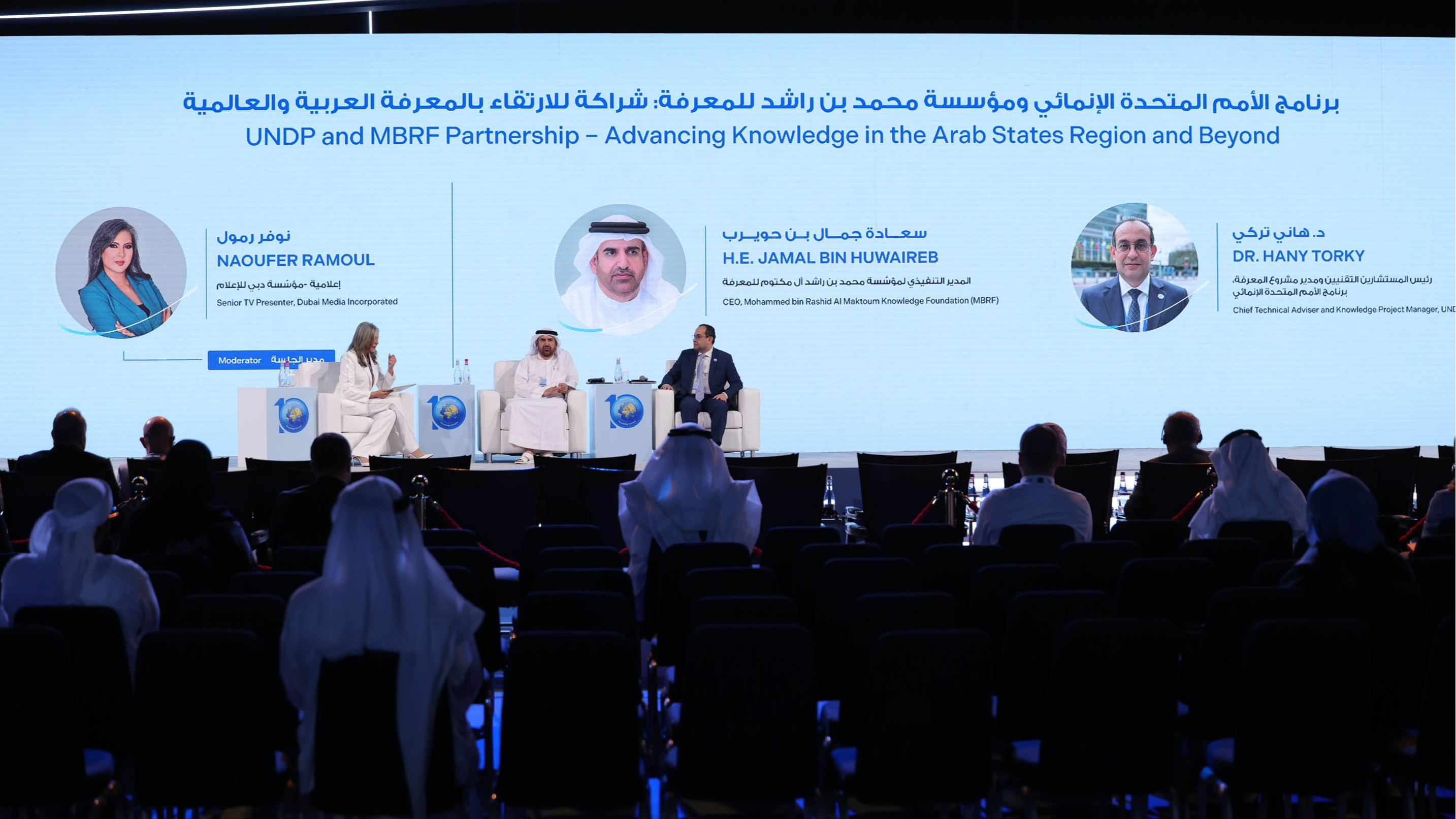
The Global Knowledge Index (GKI) 2025 has underscored the growing importance of knowledge as a key driver of economic competitiveness, resilience and sustainable development, as countries increasingly embrace artificial intelligence (AI), innovation and digital transformation.
Published annually by the Mohammed bin Rashid Al Maktoum Knowledge Foundation (MBRF) in partnership with the United Nations Development Programme (UNDP), the report highlights how knowledge has evolved beyond education and information sharing to become a strategic asset that enables nations to adapt to rapid global changes and build future-ready economies.
The report notes that continuous investment in education, research and development (R&D), innovation and digital infrastructure is essential for strengthening economic resilience, enhancing stability and improving quality of life. It also emphasises that developing integrated knowledge economies is no longer optional but a strategic necessity for sustainable growth.
Global reach expands
The 2025 edition of the Global Knowledge Index covers 195 countries, up from 141 countries in its inaugural edition, reflecting its growing global reach and relevance. The report has also surpassed three million downloads, reinforcing its status as an international benchmark for measuring knowledge performance.
Using a comprehensive scientific methodology, the index evaluates countries across multiple pillars, including education, scientific research, innovation and information and communications technology (ICT). The findings provide policymakers with data-driven insights to identify strengths, address developmental gaps and formulate strategies that support long-term growth.
The report also highlights the increasing role of AI and advanced digital technologies in shaping knowledge production, noting that integrating these technologies across economic and social sectors has become a critical component of national competitiveness and future readiness.
Wealth alone does not guarantee knowledge leadership
One of the report's key findings is that economic prosperity does not automatically translate into excellence in knowledge development.
Switzerland ranked first globally with a score of 67.8, while Guyana recorded 29.5, resulting in a gap of 38.3 points, despite both countries being classified as high-income economies.
According to the report, the findings demonstrate that sustained investment in education, research and innovation is essential to achieving knowledge leadership. The largest performance gaps were observed in research, development and innovation, where differences between countries reached as much as 51 points.
UAE strengthens global position
The report highlights the UAE’s continued progress in building a knowledge-based economy, with the country ranking 26th among 74 countries in the Very High Human Development category.
The ranking reflects the UAE’s strategic investments in human capital, innovation ecosystems and policies that position knowledge as a central pillar of national development.
Knowledge Summit 2026 to unveil next index
The Global Knowledge Index 2026 will introduce updated analytical methodologies and measurement tools designed to reflect the rapid evolution of artificial intelligence, emerging technologies and the digital economy.
MBRF and UNDP will officially launch the next edition during the Knowledge Summit 2026, scheduled to take place on 17–18 November at the Dubai World Trade Centre.
Held under the theme "Knowledge: Navigating Crises in a Changing World," the summit will bring together global policymakers, experts and researchers to discuss the future of knowledge, technology-driven transformation and international best practices for building resilient, knowledge-based economies.








Comments
0 commentsNo comments yet. Be the first to share your thoughts!