
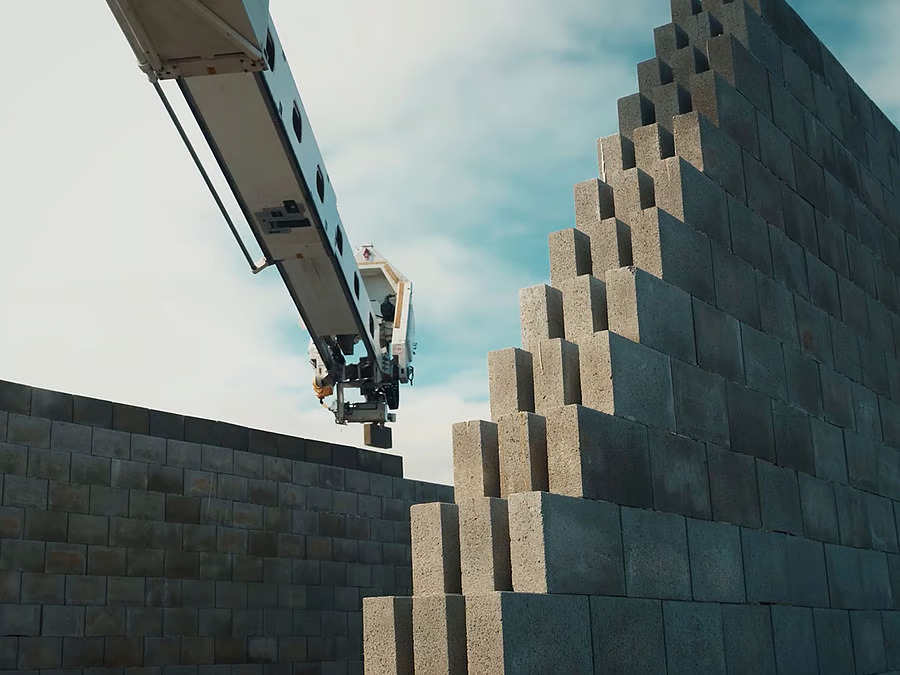
Dubai plans world’s first fully robot-built residential villa
Dubai Municipality has announced plans to construct the world’s first residential villa built entirely using robotic construction systems, marking a significant milestone in the emirate’s drive to advance smart construction and future-ready urban development.
The pioneering project will be delivered through a local and international consortium led by Dubai Municipality and involving more than 25 advanced technology companies and academic institutions. The initiative aims to demonstrate how robotics and automation can reshape residential construction by improving efficiency, sustainability, and build quality.
The villa will be developed in partnership with Zacua Ventures and the Würth Group, with the participation of specialised construction robotics companies alongside local contractors and engineering firms. The project is expected to serve as a global benchmark for the application of robotics in housing construction.
The announcement was made during an event marking the activation of the Construction Innovation and Research Centre (04 ConTech Valley), launched in partnership with Expo City Dubai. The centre has been established following the signing of an agreement to create a dedicated hub for innovation and research in construction materials, systems, and technologies. Its mandate includes supporting next-generation construction solutions, urban systems, and future city infrastructure.
During the same event, Dubai Municipality unveiled the Global ConTech Report, developed in collaboration with Zacua Ventures. The report highlights accelerating global adoption of construction technologies and forecasts that investments in the sector will exceed $30 billion by 2033, growing at an annual rate of 17.5 per cent. It identifies labour shortages as one of the most critical challenges facing the global construction industry, driving increased reliance on robotics, additive manufacturing, and artificial intelligence.
The report also outlines key technologies shaping the future of construction, including AI, robotics, infrastructure technology, and prefabrication.
As part of its broader transformation agenda, Dubai Municipality, in collaboration with Sobha Realty, launched the 70–70 Strategy for 2030. The strategy targets shifting 70 per cent of construction activities to off-site manufacturing while achieving at least 70 per cent automation within factories by 2030, supporting higher levels of quality, productivity, and sustainability.
Additional announcements during the event included the accreditation of China State Construction Engineering Corporation for its modular construction system, reinforcing Dubai’s smart construction standards. Meanwhile, AMANA revealed plans to adopt modular construction solutions to develop shared workspaces for youth within public facilities, offering flexible and integrated working environments.








Add Your Directory With Us
Boost your visibility with our Business Directory

Add Your BCard With Us
Open the door to new professional connections.
DayOfDubai
Business Services
