
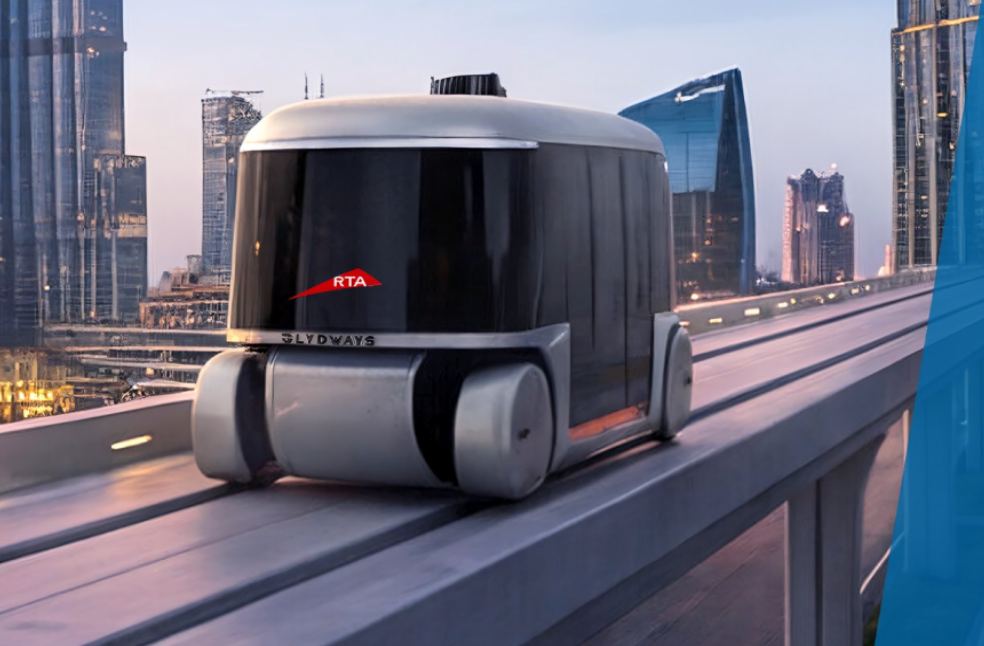
Dubai Loop and Glydways Projects Set to Reduce Traffic and Improve Urban Mobility
Dubai has unveiled two major smart mobility projects — Dubai Loop and Glydways — at the World Government Summit, aimed at cutting traffic congestion and strengthening last-mile connectivity across the city. The initiatives, presented at the RTA pavilion, are designed to offer faster, tech-enabled transport alternatives both underground and on dedicated surface corridors.
The Roads and Transport Authority (RTA) said the projects form part of its broader strategy to improve traffic flow and modernise urban transport networks. Last year alone, RTA completed 67 rapid traffic improvement measures across Dubai, and the new systems are expected to significantly boost commuter efficiency.
Dubai Loop: Underground tunnel transport network
The Dubai Loop project will introduce a one-directional underground tunnel network inspired by the “vehicles in tunnels” mobility model. The system is designed to move cars through narrow tunnels and bypass surface congestion entirely.
The first phase will connect Dubai Mall and Dubai International Financial Centre (DIFC) through four stations. The tunnels will measure about 3.6 metres in diameter and are expected to serve up to 100 vehicles, with a projected capacity of 13,000 passengers per day. Travel time on this route is expected to drop from 20 minutes to about 3 minutes.
Future expansion plans aim to extend the network to around 22–24 kilometres, linking key commercial zones including Dubai World Trade Centre, DIFC, and Business Bay. The full project is estimated to cost about Dh2.5 billion and include 19 stations.
Glydways: Self-driving pods for last-mile connectivity
The Glydways system will deploy self-driving electric pods operating on dedicated lanes roughly the width of a bike path. These pods will primarily connect metro stations to nearby destinations, helping solve last-mile transport challenges.
Each pod will carry 4 to 6 passengers and can travel at speeds of up to 50kmph. Multiple pods can link together in a platoon formation, increasing capacity to more than 10,000 passengers per hour per direction. Because they run on separate guided paths, they will remain unaffected by regular road traffic.
The system will be introduced in four initial locations:
-
Bluewaters Island: 2.8km route from National Paints Metro Station to Bluewaters (pilot route expected to begin first)
-
Umm Suqeim: 1.9km from Mall of the Emirates Metro Station to Madinat Jumeirah
-
Al Quoz: 2.6km linking OnPassive Metro Station with Alserkal Avenue and Times Square Centre
-
Dubai Festival City: 7km internal network with potential connection to the Dubai Metro Blue Line
Authorities said the Glydways network can be deployed above or below ground without heavy rail infrastructure or overhead wiring, allowing faster and more flexible rollout. Wider city deployment is planned after the testing phase.
Together, Dubai Loop and Glydways are expected to support Dubai’s long-term goals for smart transport, reduced congestion, and faster commuter movement.







Add Your Directory With Us
Boost your visibility with our Business Directory

Add Your BCard With Us
Open the door to new professional connections.
DayOfDubai
Business Services
