
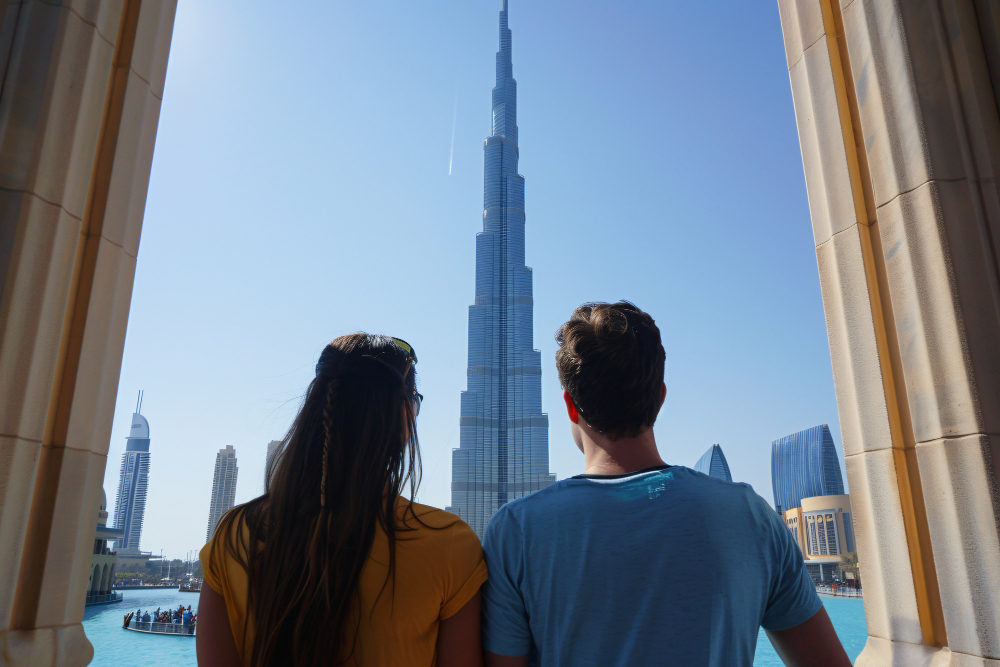
Beyond Burj Khalifa: Dubai tour guides reveal hidden attractions, authentic tourism experiences
For many visitors, a trip to Dubai begins — and often ends — with a photo of the Burj Khalifa. But beyond the world’s tallest tower lies a deeper narrative of trade, resilience, culture, and community that a new generation of tour guides is determined to share.
These cultural ambassadors are steering travellers beyond the skyline and into heritage districts, traditional farms, and culinary enclaves that reflect the emirate’s true story.
Reclaiming the narrative
One of those leading the shift is Mohammed Kazim, an Emirati from a family rooted in Al Fahidi Historical Neighbourhood. A co-founder of the cultural platform Tamashee, Kazim began guiding in 2018 after overhearing inaccurate commentary about Emirati culture in an old market.
“If we don’t take ownership of our narrative, even well-intentioned people may misrepresent our history and values,” he said.
Kazim now guides VVIPs and institutions through heritage districts, archaeological sites, and old agricultural systems — explaining how “old Dubai” was shaped not by oil alone, but by trade, openness, and adaptation.
Historically known as Al Wasl — meaning “the meeting place” — Dubai was a crossroads where desert tribes, coastal traders, pearl divers, and merchants converged. “Diversity was not a slogan; it was a necessity,” Kazim explained.
Correcting misconceptions
For Priyanka Zielinski, founder of Dubai by Foot, authentic tourism also means challenging stereotypes.
A long-time Dubai resident, she frequently addresses the misconception that all Emiratis are wealthy and do not work.
“Emiratis don’t get handouts; they work full-time jobs across every sector,” she said, adding that resilience has defined Emirati society — from Bedouin desert survival and pearl diving to economic diversification beyond oil.
She also highlights gender representation, noting that women hold 20 of 40 seats in the Federal National Council — a fact that often surprises visitors.
Hidden gems beyond the mainstream
Zielinski introduces guests to lesser-known cultural spaces such as Alserkal Avenue, Dubai’s contemporary arts district, where regional and international creativity intersect.
She also takes visitors to Wadi Al Amardi, an authentic Emirati farm experience, and to Al Fanar Restaurant, where traditional Emirati cuisine is served in a nostalgic 1960s-inspired setting.
“These experiences reveal the soul of Dubai — not only its ambition and modernity, but its deep commitment to heritage and bringing people together,” she said.
Culture through cuisine
For Arva Ahmed, founder of Frying Pan Adventures, food is the most immediate way to bridge cultures.
“Food is a universal language,” Ahmed said. “Through it, people quickly realise that Emirati culture is deeply human, diverse, and connected.”
Her tours focus on Dubai’s lesser-known culinary communities, reflecting the city’s identity as a crossroads of global cultures.
Training the next generation
Behind this movement is structured training. The Dubai College of Tourism has licensed more than 2,400 guides from over 50 nationalities through its fully online Dubai Tour Guide Programme.
The initiative supports Dubai’s D33 economic agenda and the emirate’s growing tourism sector, which welcomed 17.55 million international visitors between January and November 2025.
The challenge of depth
Despite growing interest, guides say their biggest challenge is encouraging visitors to slow down.
“Heritage is often marketed as secondary to spectacle,” Kazim said. “Convincing people that an old irrigation system can be as powerful as a skyline requires patience and storytelling.”
Yet when travellers embrace that depth, the impact is lasting.
“When it works, it changes how people see not just Dubai, but the region as a whole,” Kazim added. “Dubai is a dynamic ecosystem — constantly evolving while firmly rooted in its past.”




Add Your Directory With Us
Boost your visibility with our Business Directory

Add Your BCard With Us
Open the door to new professional connections.
DayOfDubai
Business Services
