


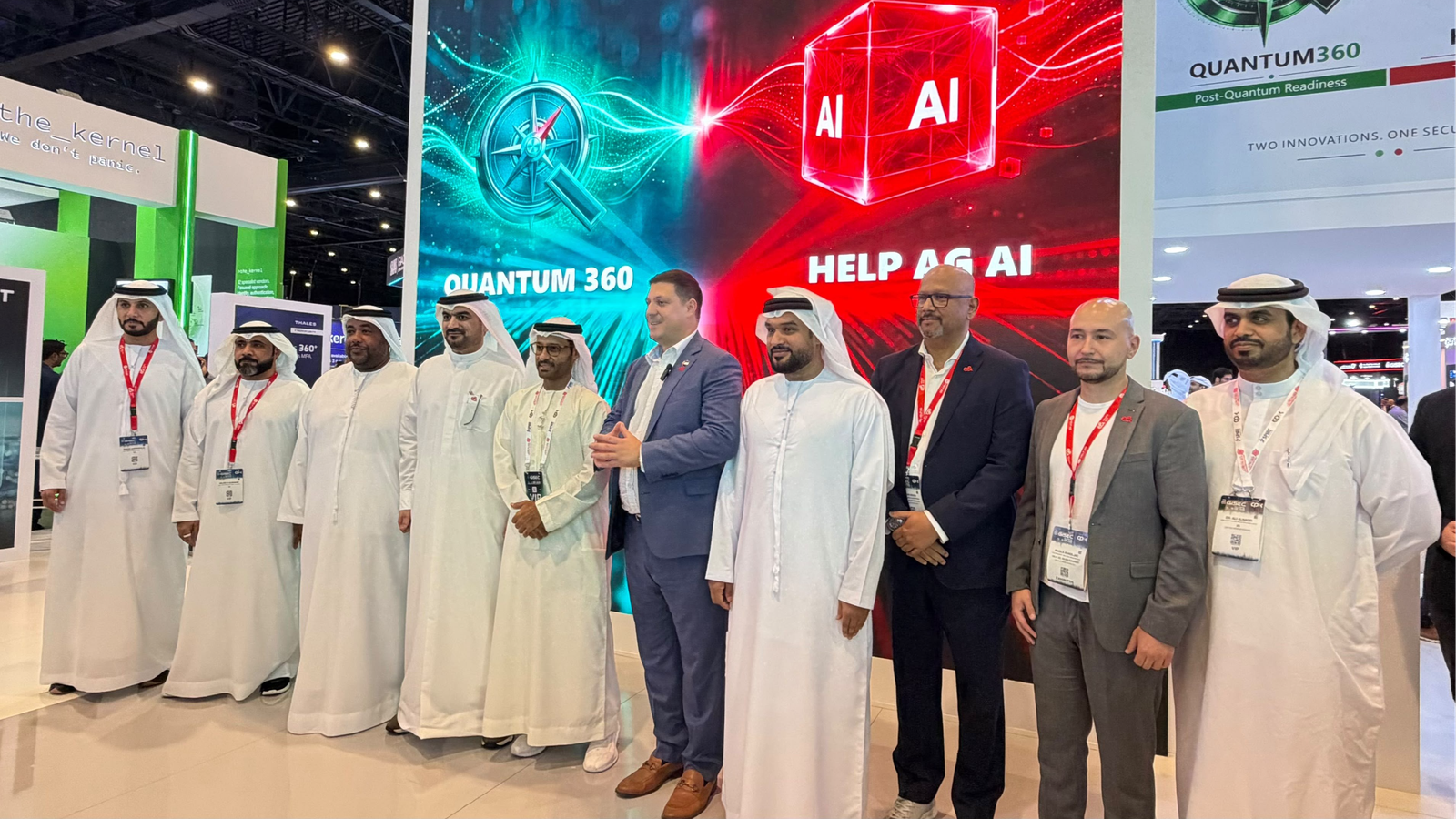
Help AG, the cybersecurity arm of e&, has launched Quantum 360, a new portfolio of post-quantum cybersecurity services designed to help government entities, critical infrastructure operators and enterprises assess their cryptographic exposure and prepare for the transition to quantum-safe security.
The announcement was made during the second day of GISEC Global 2026 in Dubai, where Help AG introduced the new offering in collaboration with e&. The launch ceremony was attended by senior executives, including Abdulla Ebrahim Al Ahmed, Chief Government and VVIP Relations Officer at e& UAE, and Dr Aleksandar Valjarevic, recently appointed CEO of Help AG.
Supporting national post-quantum readiness
The launch comes as post-quantum cybersecurity gains importance within the UAE’s national digital security agenda. The UAE’s National Encryption Policy, issued by the UAE Cybersecurity Council, calls on government entities to establish approved transition plans from traditional encryption methods to post-quantum cryptography. The Dubai Electronic Security Center (DESC) has also introduced guidelines to support the adoption of post-quantum security measures.
Abdulla Ebrahim Al Ahmed said the UAE has consistently worked to anticipate future technologies and establish frameworks for their secure adoption.
“As the quantum era approaches, strengthening cyber resilience and building post-quantum security will be critical to protecting sensitive data, critical infrastructure and the wider digital economy,” he said.
Dr Valjarevic noted that organisations are increasingly moving from discussing the future impact of quantum computing to assessing their preparedness.
“Organisations need to understand where cryptographic assets exist today, what is most exposed and what needs to change first. Quantum 360 is designed to provide a practical journey towards quantum readiness,” he said.
Understanding the quantum challenge
Quantum computing uses advanced processing methods that could solve certain problems significantly faster than conventional computers. Experts have warned that sufficiently powerful quantum computers may eventually be capable of breaking some current public-key encryption methods, potentially exposing long-term sensitive data such as medical records, trade secrets and national security information.
Cybersecurity specialists have also highlighted the risk of “harvest now, decrypt later” attacks, where encrypted information is collected today with the intention of decrypting it in the future once quantum capabilities mature.
Three-stage approach
Help AG said Quantum 360 is designed as an end-to-end framework that supports organisations from assessment to implementation.
The portfolio consists of three services:
- Q-Lens – Assessment: Discovers cryptographic assets, including certificates, keys, algorithms and dependencies across on-premises, hybrid and multi-cloud environments.
- Q-Path – Advisory: Assesses quantum exposure, identifies priorities and develops migration roadmaps aligned with business and regulatory requirements.
- Q-Seal – Implementation: Supports the deployment of quantum-safe technologies, including advanced key distribution approaches for highly sensitive environments.
The framework follows a structured process of: Discover → Understand → Prioritise → Transition → Protect.
Help AG said there is no single approach to post-quantum migration, with transition plans depending on factors such as data sensitivity, business requirements, existing infrastructure and regulatory obligations.














Comments
0 commentsNo comments yet. Be the first to share your thoughts!