

You finally sit down to buy health insurance in UAE. After scrolling through a few plans, you spot one with a low premium and think—this looks good enough. Fast forward a few months: you land in the hospital and your “good enough” plan barely covers the basics. Now you’re stuck paying bills you thought were covered. This is the reality for many people in the UAE.
From 2025, health insurance is mandatory in all Emirates, but having a policy isn’t the same as having the right policy. And most people make the same mistakes when buying one.
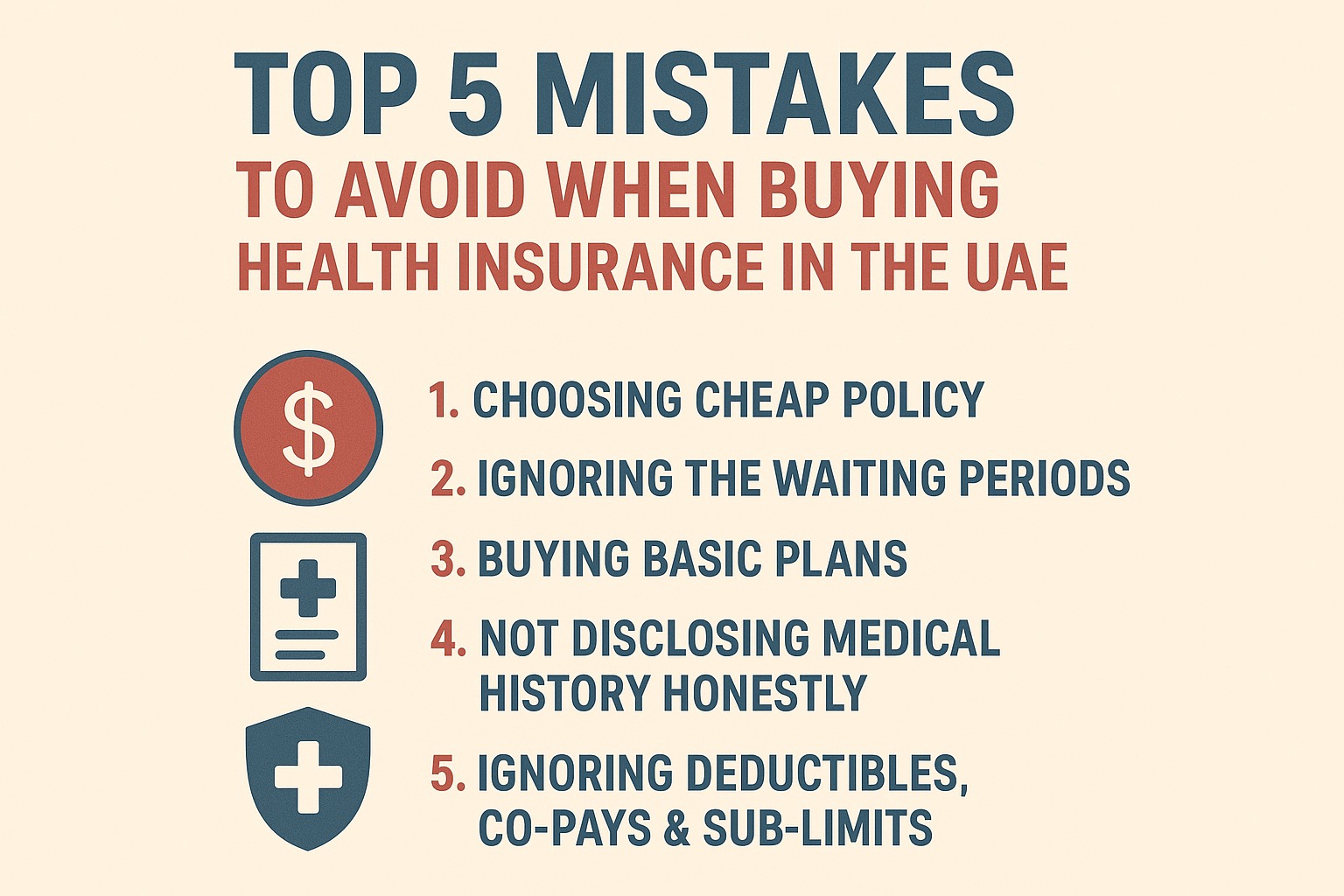
This blog covers the top 5 mistakes to avoid when buying health insurance in UAE. If you want coverage that actually protects you when it is required, read on.
-
Choosing a Policy Just Because It’s Cheap
It’s tempting to pick a health insurance plan just because the premium is low. After all, who doesn’t want to save money? But in health insurance, cheaper doesn’t always mean better and it can cost you more in the long run.
Many low-premium health insurance plans in the UAE offer only basic coverage. That might mean —
- Limited hospital networks (so you can’t visit the good hospitals near you),
- Exclusions on chronic illness treatment,
- Or barely any maternity or dental benefits.
In some cases, outpatient services like consultations or lab tests might not even be included. You’ll pay for those out of pocket—defeating the purpose of having insurance in the first place.
|
Tip: Don’t just compare Medical Insurance prices. Take time to compare benefits, network hospitals, claim process, exclusions, and annual limits. A slightly higher premium might offer much better protection and peace of mind in the long run. |
-
Ignoring the Waiting Periods
One of the most overlooked parts of a health insurance policy is the waiting period, and it can catch you off guard if you don’t pay attention.
A waiting period is the time you need to wait after buying the policy before you can use certain benefits. In the UAE, this often applies to —
- Pre-existing conditions (like diabetes, high blood pressure)
- Maternity cover
- Dental or optical benefits
For example, maternity benefits in many UAE plans come with a waiting period of 6 to 12 months. If you buy a policy and get pregnant right away, the costs may not be covered. Similarly, treatment for chronic illnesses might not be approved until the waiting period is over, usually around 6 months or more, depending on the provider.
|
Tip: Always ask about the waiting periods before you sign. If you have pre-existing conditions or are planning for a baby, it is essential to pick a policy that aligns with your current and future health needs. |
-
Go with the Basic Plans Without Assessing Your Needs
A lot of people assume that if a health insurance plan meets the UAE’s minimum legal requirements, it's good enough. But “basic coverage” is often just the bare minimum and it might not be nearly enough when something serious happens.
Basic plans usually cover —
- Emergency care
- GP consultations
- Some medication
- A limited list of hospitals (within the approved network)
But here’s what they often don’t cover —
- Specialist consultations without referrals
- International coverage (if you travel)
- Dental, optical, mental health or physiotherapy
These gaps can leave you paying large amounts from your own pocket when you least expect it. Therefore, a good comprehensive health insurance policy should go beyond the basics.
It should cover specialist visits, chronic conditions, wellness checkups and give you access to a wider hospital network—even across Emirates or internationally.
|
Tip: Don’t assume “covered” means you are fully protected. Look at what’s included, where it’s valid and how claims are approved. If you can afford a slightly higher plan tier, it’s often worth it. |
-
Hiding or Not Disclosing Your Medical History Honestly
It might seem harmless to skip a few details when filling out your health insurance application—especially if you're worried about higher premiums. But in reality, not being honest about your medical history can seriously backfire.
Insurance companies in the UAE have the right to reject a claim if they find out that a pre-existing condition wasn’t declared at the time of policy purchase. Even something as common as high blood pressure, asthma or past surgeries can lead to problems if not disclosed.
In some cases, policies might be cancelled altogether or benefits denied for anything related to the undeclared condition. And once that happens, it’s much harder to get proper coverage from another provider.
|
Tip: Always be upfront about your health history—even if you think it’s minor. Some insurers may still cover pre-existing conditions after a waiting period or offer a slightly adjusted premium. It’s much better to pay a little more now than face claim rejections later. |
-
Ignoring Deductibles, Co-Pays & Sub-Limits
This is one of the most misunderstood parts of health insurance.
Many people sign up for health insurance in the UAE without fully understanding the deductibles, co-pays and sub-limits. These are the portions of medical costs you still have to pay, even if you’re insured.
Here’s how they work —
- Deductible: A fixed amount you must pay before your insurance kicks in.
Example: If your plan has a AED 1,000 deductible, you pay the first AED 1,000 of any treatment yourself. - Co-pay: A percentage or flat fee you pay every time you use a service.
Example: If your co-pay for a specialist is 20%, and the consultation costs AED 400, you pay AED 80. - Sub-limits: A maximum cap the insurer will pay for certain treatments.
Example: Your plan might cover maternity up to AED 10,000—even if your delivery costs AED 15,000. The rest comes from your pocket.
These clauses are often hidden in the fine print, but they matter a lot.
|
Tip: Don’t just ask what’s covered. Ask how much is covered, what you need to pay per visit and if there are caps or limits on big-ticket items like maternity, surgeries or hospitalisation. |
Choose Smart, Not Fast
Health insurance isn’t something you buy every day, and it’s not something you want to get wrong. A little time spent understanding the details can make a big difference when you need care.
So before you hit that “buy” button, take a moment to pause. Ask the right questions. Look beyond the price tag. And make sure the plan you choose actually works for you—not just on paper, but in real life.














Comments
0 commentsNo comments yet. Be the first to share your thoughts!